
CASE STUDY | FULL-FUNNEL CRO
From 0,5% to 4% Conversion Rate
How strategic segmentation and a complete checkout rebuild turned a losing funnel into a scalable profit engine.
8x CR Increase
0.5% → 4% Conversion Rate
Executive summary
A live/online course with an Average Order Value (AOV) of ~$70 USD, centered around hormonal health (The Aviva Method), a practice completely unknown to the target audience.
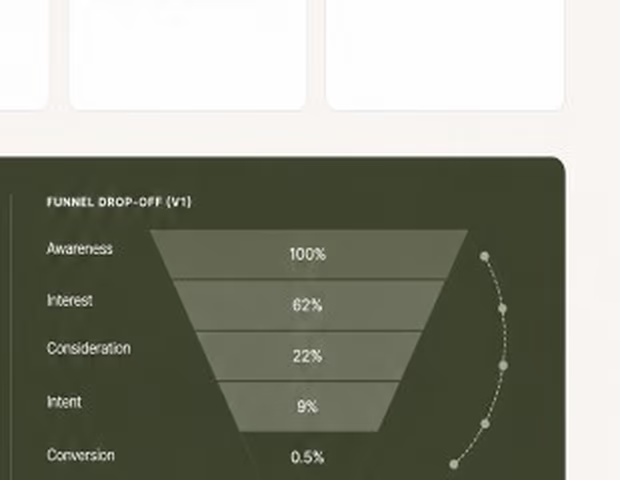
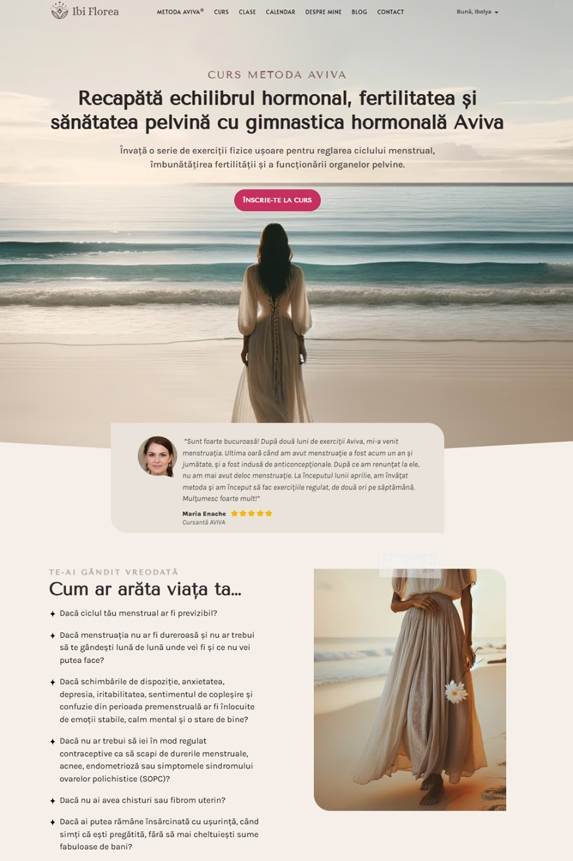
The initial landing page (V1) suffered from severe message dilution, trying to sell to all target demographics in a single place. This resulted in a poor 0.5% conversion rate (CVR) measured over ~1,200 unique sessions during the first 4 weeks.
Deployed a qualitative survey capturing data from 110 respondents to group customer issues. Split the ecosystem into dedicated funnels (V2, V3, V4), optimized page speed via a custom VPS setup, and completely re-engineered the default WooCommerce checkout via a custom registration script.
Over a 12-week cohort, the CVR on the primary Fertility landing page (V2) stabilized at 4% over an evaluation sample of n ≈ 4,500 total unique sessions, driving the brand past the 150+ lifetime course sign-ups milestone.
With a targeted ad spend of ~$900 USD driving ~3,500 paid sessions at an average CPC of ~$0.25 USD, the funnel generated a cold-traffic CAC of ~$15 USD and an initial front-end ROAS of ~4.7x. Additionally, because women need regular long-term practice to see physical results, 60% of students chose to purchase the client's secondary product, an $80 USD/month practice class package, with half of them staying for 5 to 6 months due to the excellent quality of the classes.
Step 1: Full-Funnel Marketing Strategy & Blueprinting in Figma
Before touching the website, I designed the entire journey. In Figma, we mapped the strategy, messaging, personas, and channel plan into a visual blueprint—aligning marketing, product, and offers around one clear path to conversion.
Scope, Vision & Objectives
- Aligned the educational mission with commercial milestones: converting cold traffic into a one-time course sale, then transitioning students into high-margin monthly practice classes.
Buyer Persona Mapping (5 Profiles)
- Outlined 5 distinct customer profiles (ranging from the prevention-focused Proactive Seeker to the time-crunched Career-Driven Woman or the Emotionally Overwhelmed Client seeking a supportive community), pinpointing their specific conversion barriers and purchasing triggers.
Key Messaging & Value Proposition
- Formulated the primary content angles (natural solutions, regaining bodily control, clinically backed movement) and established the client's unique authority hooks as the first certified trainer in the language.
Customer Journey & Channel Tactics
- Plotted the end-to-end user path: from initial awareness (Meta & Google Ads) to consideration (on-site quizzes, free webinars), the checkout stage, and long-term community retention.
The Structural Flaw: Message Dilution
Using this initial plan, I launched the first version of the landing page (V1) with a broad copywriting framework designed to address all 5 personas and conditions simultaneously.
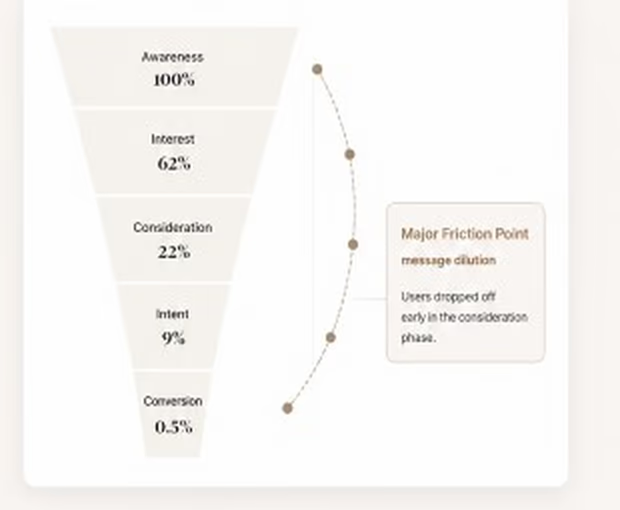
Analytics data from Microsoft Clarity and PostHog quickly exposed a major friction point: message dilution. By trying to address infertility and menopause in the exact same view, the page lost its direct emotional weight, causing users to drop off early in the consideration phase.
Step 2: Technical Deployment (V1), Copywriting & Data Infrastructure
To push the initial V1 MVP live and gather real-world behavioral baselines, I executed the foundational technical setup:
Speed-Centric Architecture (CRO Hosting)
I selected WordPress for long-term client autonomy. However, knowing that slow load times instantly tank conversions, I skipped shared hosting entirely. I provisioned a dedicated Virtual Private Server (VPS) and deployed Varnish Cache. This lowered load speeds from 9 seconds to under 1.5 seconds.
Empathetic Copywriting (PAS Formula)
Written using the PAS (Problem, Agitate, Solution) framework, the copy mirrored the physical symptoms and emotional anxieties of the audience, positioning the Aviva Method as a natural solution.
Advanced Analytics Infrastructure
Deployed PostHog and Microsoft Clarity via custom Google Tag Manager (GTM) data layer configurations. I built custom conversion funnels in PostHog and prepared Clarity to record raw user behavior.
Market Validation (Paid Traffic Test)
I launched broad Meta Ads campaigns to drive qualified initial traffic to the V1 general page, testing how a combined audience would react to a unified message.
The Baseline Results (V1):
PostHog funnel tracking revealed massive drop-offs within the middle containers of the page. The general copy triggered high cognitive friction; users felt the solution wasn't specific to their diagnosis. The initial conversion rate flatlined at just 0.5%, measured over an exact sample of ~1,200 targeted paid sessions during the first 4 weeks before the pivot.